

This topic explainer explores the Westminster system – one of the world’s most widely used democratic systems – and its unique form in the ACT.
|
Hover your cursor over a curriculum link for its full title |
 Learning goals
 Curriculum links
What is the Westminster system?
The Westminster system is a democratic style of government that developed in England over many centuries. It is used in over 25 other countries around the world, including Australia.
Features of the system
Some of the key features of the Westminster system include:
- The powers of government are separated between three branches: the Legislature, Executive, and Judiciary.
- A ceremonial head of state, such as a monarch (king or queen) or their representative at a sub-national level (e.g., state governors, territory administrators).
- An elected parliament of one or two houses.
- A government formed by the political party that has the majority of support in the lower house of parliament.
- An appointed head of government (e.g., a prime minister, chief minister, or premier).
- A ministry made up of elected members of parliament, and
- An independent judiciary (courts).
Features of the system in the ACT
The Westminster system in the ACT has some unique feature that are not found elsewhere:
- We have no head of state: the monarch has no administrator in the ACT.
- Our parliament has only one house, making it ‘unicameral’ (a single-house parliament).
- Our head of government is elected, not appointed – with no head of state, the Assembly elects a Chief Minister on the first sitting day after an election instead.
Reflection questions
- In which country did the Westminster system develop?
- List two features of the Westminster system unique to the ACT and explain how they differ from the system’s typical features.
Other Westminster features
The mace
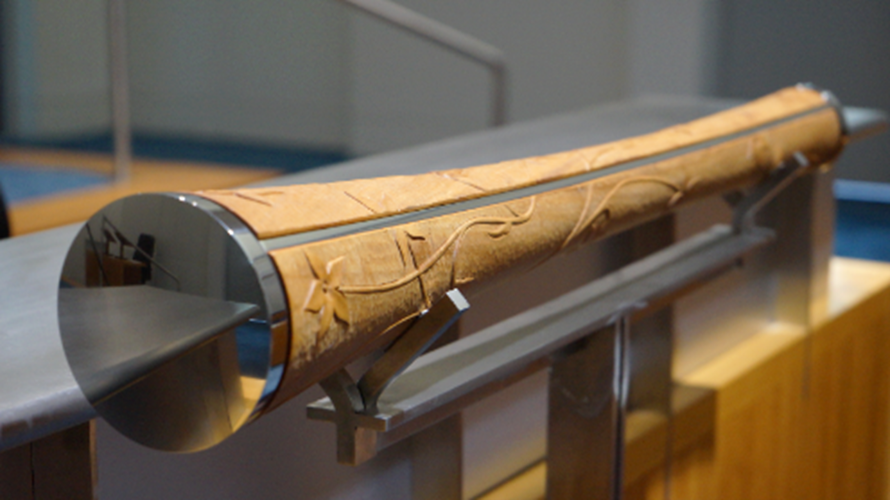
Most Westminster parliaments have a ceremonial mace that is carried in and out of the chamber every sitting day. The mace is a symbol of the Speaker’s authority and comes from a tradition of the Speaker’s bodyguard – called a serjeant-at-arms – carrying a weapon to protect them.
The Assembly’s mace is made of locally sourced Yellow Box timber with a stainless-steel spine. It is 95cm long and weighs 8.5kg. The territory floral emblem –the royal bluebell – is carved out of the timber.
The Speaker
The role of the Speaker originated in the England in the 1300s and was quite a dangerous role. The Speaker was responsible for delivering news to the monarch. If the monarch did not like the news, they could have the Speaker executed.
In modern Westminster parliaments such as the ACT Legislative Assembly, the role of the Speaker is very important and thankfully not as dangerous. They maintain order, ensure members follow the rules of the parliament, and discipline members if required.
They also represent the Assembly in ceremonial situations.
The Clerks
The Clerk is the Assembly’s most senior official who supports the parliament. Their responsibilities include assisting the Speaker on sitting days, maintaining the Assembly’s records and providing procedural advice to members.
The Deputy Clerk and Serjeant-at-Arms has a similar job to the Clerk. In addition to their duties as a Clerk, they also carry the mace to lead the Speaker in and out of the chamber on sitting days.
The carpet

Traditionally, each house in a parliament has a set colour scheme: green for the lower house, representing the fields where early public meetings were held in England; and red for the upper house, representing the noble blood of the lords who were members of this house in England.
In a break with tradition, the colour scheme of Assembly’s parliamentary chamber is blue to acknowledge the ACT’s floral emblem, the royal bluebell.
Classroom activities
There are two in-class activities associated with this topic available on our website:
 PDF 145KB)
Other resources
There are a range of other helpful resources available on this topic, the best of which we have compiled below: