

Symbols are an important part of human life. They’re things that are meaningful to a group of people and reflect the world around them. For Canberran and the ACT, our symbols reflect our local wildlife, our history, and the city’s purpose.
Canberra's coat of arms
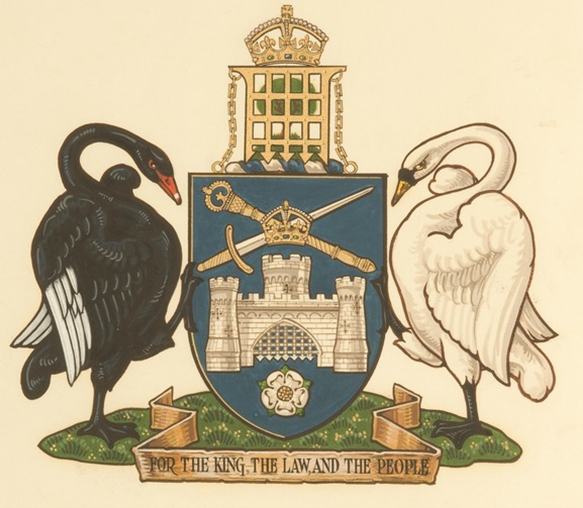

A coat of arms is a unique design on a shield that represents whomever it belongs to, like a city. Canberra’s coat of arms is our oldest symbol. It was designed in 1928 so the navy could include a design on the badge of their new ship HMAS Canberra.
Each part of its design is meant signify Canberra’s history and purpose:
- The castle represents the city’s importance
- The sword, mace, and crown represent the three branches of federal government (the courts, parliament, and executive)
- The rose is a symbol of the Duke of York, who opened the first federal parliament in 1901
- The portcullis is a symbol of Westminster, home of the British parliament
- Behind it is a gum tree, representing the city’s growth and progress, and
- The swans represent the Indigenous and settler populations.
The ACT flag

Australian Capital Territory flag
A flag is a fabric banner that represents whomever it belongs to. For its first 80 years, Canberra and the ACT never had a flag. A maroon banner with the coat of arms was used unofficially from 1930, but it was never especially popular.
The current design was the winner of a postal vote held in 1992 and adopted in 1993. Designed by Ivo Ostyn, it features the southern cross on the hoist and a modified coat of arms on the fly. Its design follows that of the Northern Territory flag.
The royal bluebell (Wahlenbergia gloriosa)

Source: KenT on NaturMapr
The royal bluebell is our floral emblem, a flower chosen to represent the area due to its abundance. It is a spring flower found only in Australia’s subalpine region, which includes the ACT. Blossoms grown 6cm above the ground and have five petals with a cluster of white stamens in the centre. Though it is called a bluebell, its colour is actually a deep purple!
It was chosen as the floral emblem by a committee and announced in 1982 by the federal Minister for the Capital Territory, Bob Ellicott.
Gang-gang cockatoos (Callocephalon fimbriatum)
Source: ANU
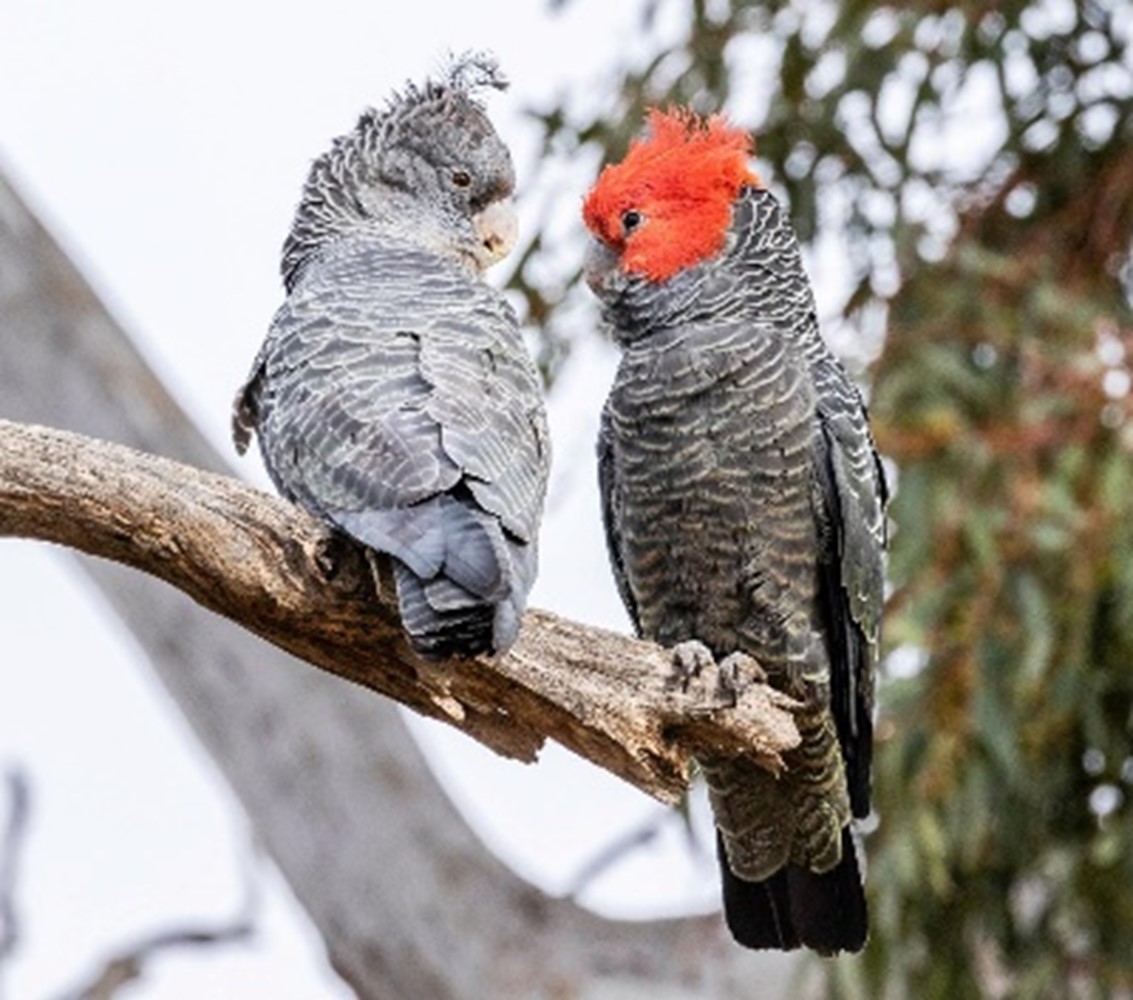
The gang-gang cockatoo is our bird emblem, as Canberra is the only city in Australia they’re found in. The male gang-gang’s bright read head and crest (the little mohawk on its head) and their call that sounds like a squeaky gate or a cork popping make them unique.
Classified as a threatened species, they build their nests in hollowed out trees, which puts them at risk of cat attacks.
They was adopted as the bird emblem of the ACT by a vote in the Legislative Assembly in 1997.
Brush-tailed rock-wallabies (Petrogale penicillata)
Source: ABC News / Danielle Bonica
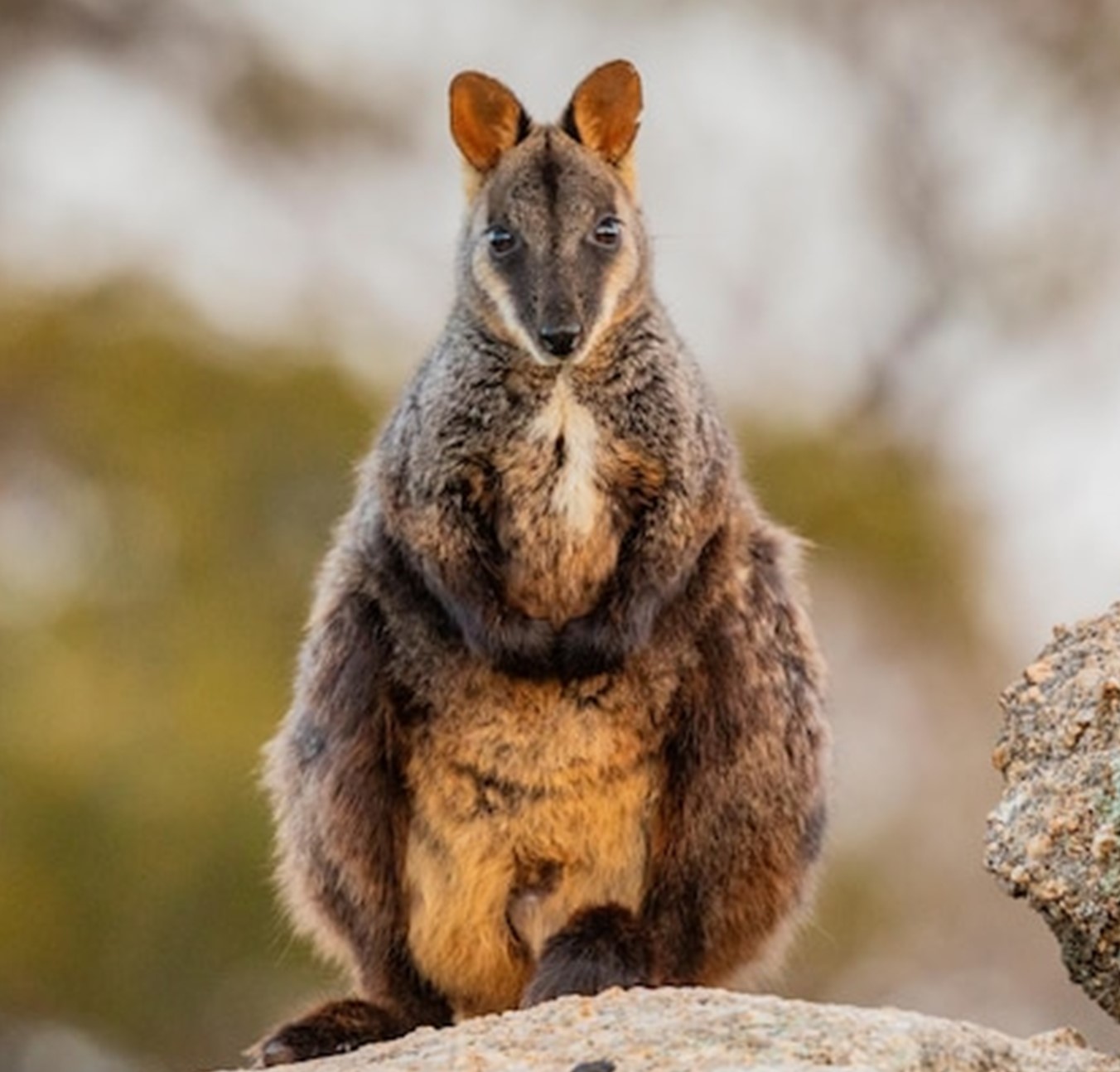
The brush-tailed rock-wallaby is our mammal emblem. Found throughout the Great Dividing Range, these rock-wallabies are experts at navigating rocky crags and cliff caves with their powerful legs and long tail. Brush-tailed rock wallabies have not been seen in the wild in the ACT since the 1950s and only 40 are believed to live in the Range’s southern reaches.
The rock-wallaby beat the bettong in a public vote and was adopted as the mammal emblem of the ACT by a vote in the Legislative Assembly in 2018.
Other symbols
There are other symbols associated with Canberra too. Some are official, like the fossil emblem Batocara mitchelli and the colours blue and gold. Others aren’t officially endorsed but are popular as unique symbols of the city, like the concrete bus shelters or The Big Powerful Owl in Belconnen.
