

Iconic Longstaff painting on display at the Assembly
31 March 2014 | Canberra, Australia | Feature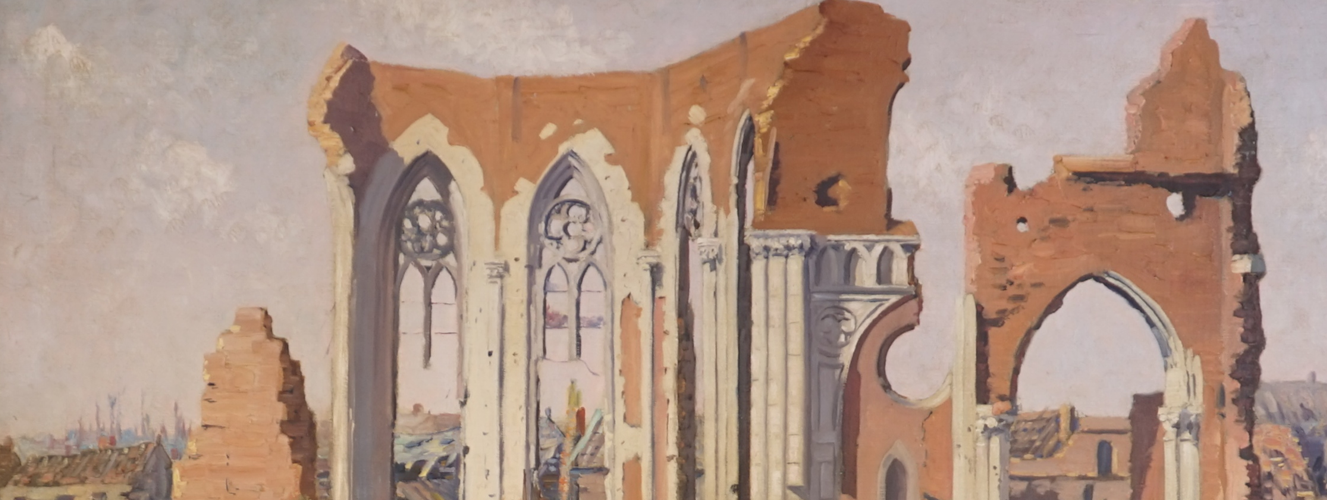
The painting 'Villers-Bretonneux, ruins of the church' by acclaimed Australian war artist Will Longstaff has found a new home in the Assembly building while on temporary loan from the Australian War Memorial. Speaker of the Assembly Vicki Dunne MLA officially received the work today, which depicts the aftermath of the Battle of Villers-Bretonneux, a brutal defensive campaign which saw the world's first tank-on-tank combat.
The ruined church of Villers-Bretonneux is powerfully symbolic of the tragedies of war. Australian forces suffered heavy casualties as part of the Allies' attempts to defend the town in April 1918. This sacrifice created a powerful and lasting bond between the people of Villers-Bretonneux and Australia. Longstaff painted the scene, an oil on canvas, while in London over 1918-19. It was acquired as part of the Commonwealth war art scheme later that year.
The painting will be displayed outside the Hospitality Room for the duration of its loan.
Will Longstaff (1879-1953)

Born 1897 in Ballarat, Victoria and cousin to Sir John Longstaff, another official war artist. Longstaff first served in the Second Boer War (1899-1902) before enlisting with the Australian Imperial Forces on the outbreak of the First World War in October 1915. He saw action in the Gallipoli and Western Front campaigns.
In 1918, he was appointed an official war artist. Working as officer in charge of camouflage for the Australian 2nd Division in France, where he saw out the end of the war, he painted a variety of subjects, including landscapes, buildings, battles, and allegorical scenes. A skilful and innovative camouflage worker, Longstaff took plane flights to note the effects of the disguises from the air. His thoroughness contributed to the successful concealment of Allied activity and probably saved many lives.
Longstaff is best known for Menin Gate at midnight, one of the most popular paintings in the Australian War Memorial's art collection. In the years following the First World War this painting's tribute to sacrifice, combined with its spiritualist overtones, struck a chord with many Australians who had lost family and friends in the war. Longstaff painted the work after attending the unveiling ceremony of the Menin Gate memorial at the Belgian town of Ypres on 24 July 1927.